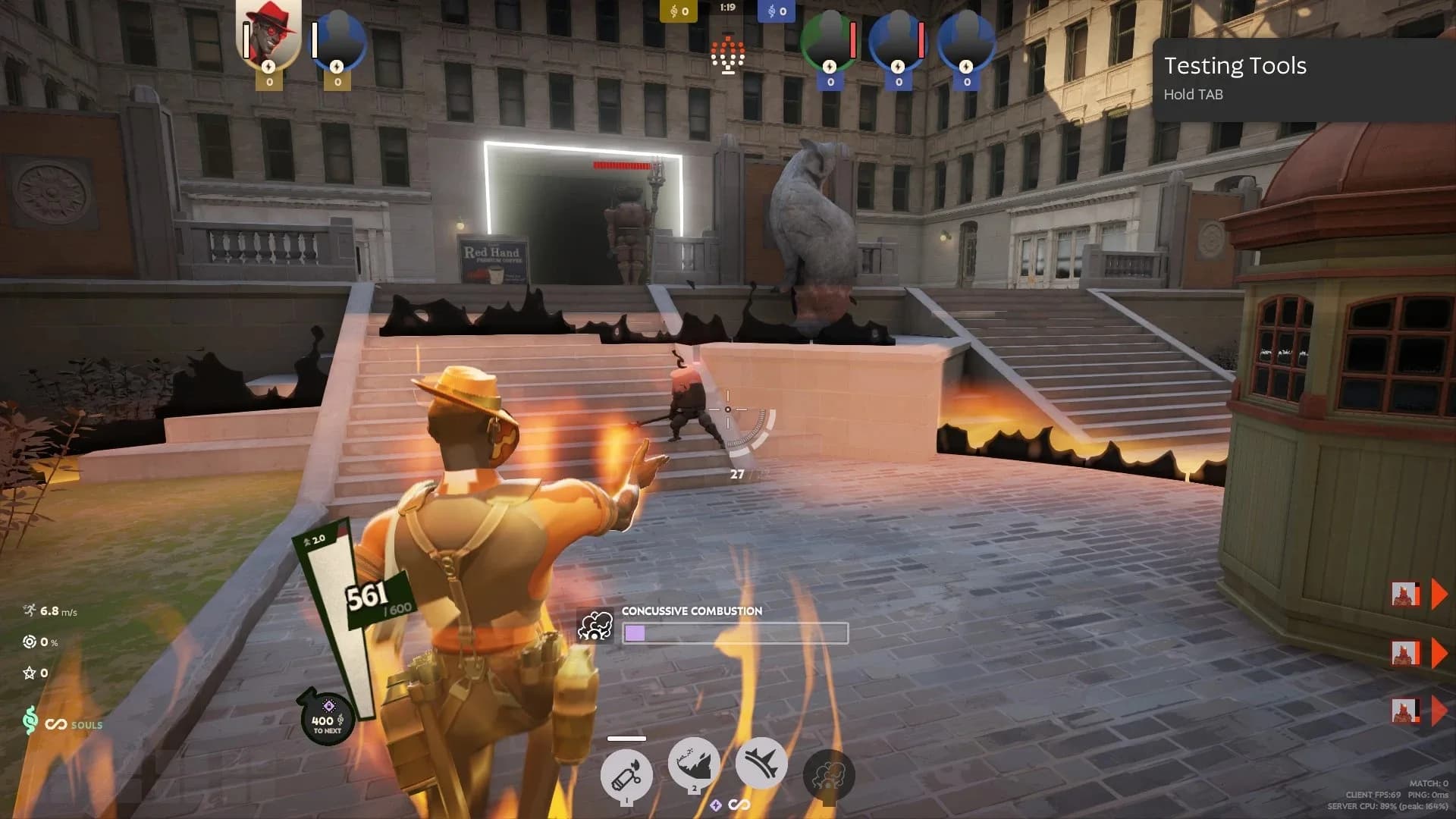




Melee attacks in Deadlock can finish a weak opponent, land the final hit on a nearby trooper or punish a player who has used all available ammunition. A predictable heavy attack can be parried.
This guide explains the difference between light and heavy melee attacks. It shows how to recognise a charged strike, parry it and respond safely.
Light melee is quick and has a smaller commitment
A light melee attack begins quickly and covers a short distance. It is useful when the target is already close and only a small amount of damage is needed.
The shorter animation lets the player return to movement sooner than after a charged strike. That makes light melee a safer choice when another enemy may enter the fight.
The attack still requires close range. Walking through open space for a light hit can cost more health than the strike removes. Use nearby cover and check the opponent's escape route before stepping forward.
Heavy melee trades speed for reach and damage
Holding the melee input charges a heavy attack. The hero prepares the strike and then moves farther during the release, creating more reach and damage than the quick version.
The preparation is visible and gives the opponent time to react. A heavy attack is therefore strongest when the enemy is busy, trapped near a wall or unable to see the beginning of the animation.
Do not begin the charge at the edge of an open lane while the target is watching. The defender can move away, use a control ability or prepare a parry before the attack arrives.
A parry is aimed at a predictable melee hit
The default parry input is F. Pressing it creates a short defensive window in front of the hero. If an enemy melee attack lands during that window, the attacker is stopped and left vulnerable.
The parry does not block every form of damage. It is a specific answer to a melee attack, so pressing it against bullets or an ability wastes the defensive action.
Watch the enemy's body rather than the health bar. A heavy melee charge has a clearer preparation than a light attack. That visible motion provides the best signal for a parry.
Action comparison
Light melee: A quick hit on a nearby target. Short reach.
Heavy melee: More damage when the target cannot escape. Visible charge can be parried.
Parry: Stop a predictable melee attack. A missed attempt creates a cooldown.
A missed parry gives the attacker another chance
Parry cannot be repeated immediately after an unsuccessful attempt. The cooldown gives the opponent time to delay the hit, step around the defender or use another source of damage.
This is why guessing too early is dangerous. An experienced attacker can begin moving forward, wait for the parry effect and then release the heavy attack after the defensive window closes.
Keep moving until the attack becomes clear. A side step may avoid the hit without using parry at all, leaving the defensive option ready for the next close exchange.

A successful parry creates a short punish window
When the parry works, the attacker falls into a vulnerable state. The defender can use that moment for a reliable attack instead of beginning another uncertain contest.
Choose the response before the fight starts. A quick weapon burst is often safer when another opponent is nearby. A strong ability or heavy melee can provide more damage when the area is controlled.
Do not spend the entire window changing weapons or searching for the perfect combination. A simple confirmed response is better than a complicated plan that begins after the opponent can move again.
Position decides whether melee is worth the risk
Close combat near a wall reduces the target's escape routes, but it can also place the attacker in a narrow area. Check where both teams are before committing to the strike.
The same rule applies to troopers. A close melee final hit can collect the reward, but crossing the whole lane for it exposes the hero. One resource is not worth losing most of the health bar here.
Practise the signal before relying on parry
Ask a practice partner to alternate between a direct heavy attack, a delayed heavy attack and no attack. Respond only when the release becomes clear.
Then repeat the exercise beside a wall and in open space. The distance changes when the heavy strike will connect, so the parry timing should be linked to the hit rather than the first movement.
Finish by adding a simple response after every successful parry. The complete habit is short: recognise the attack, press parry, confirm that it worked and use one reliable punish before returning to a safe position.